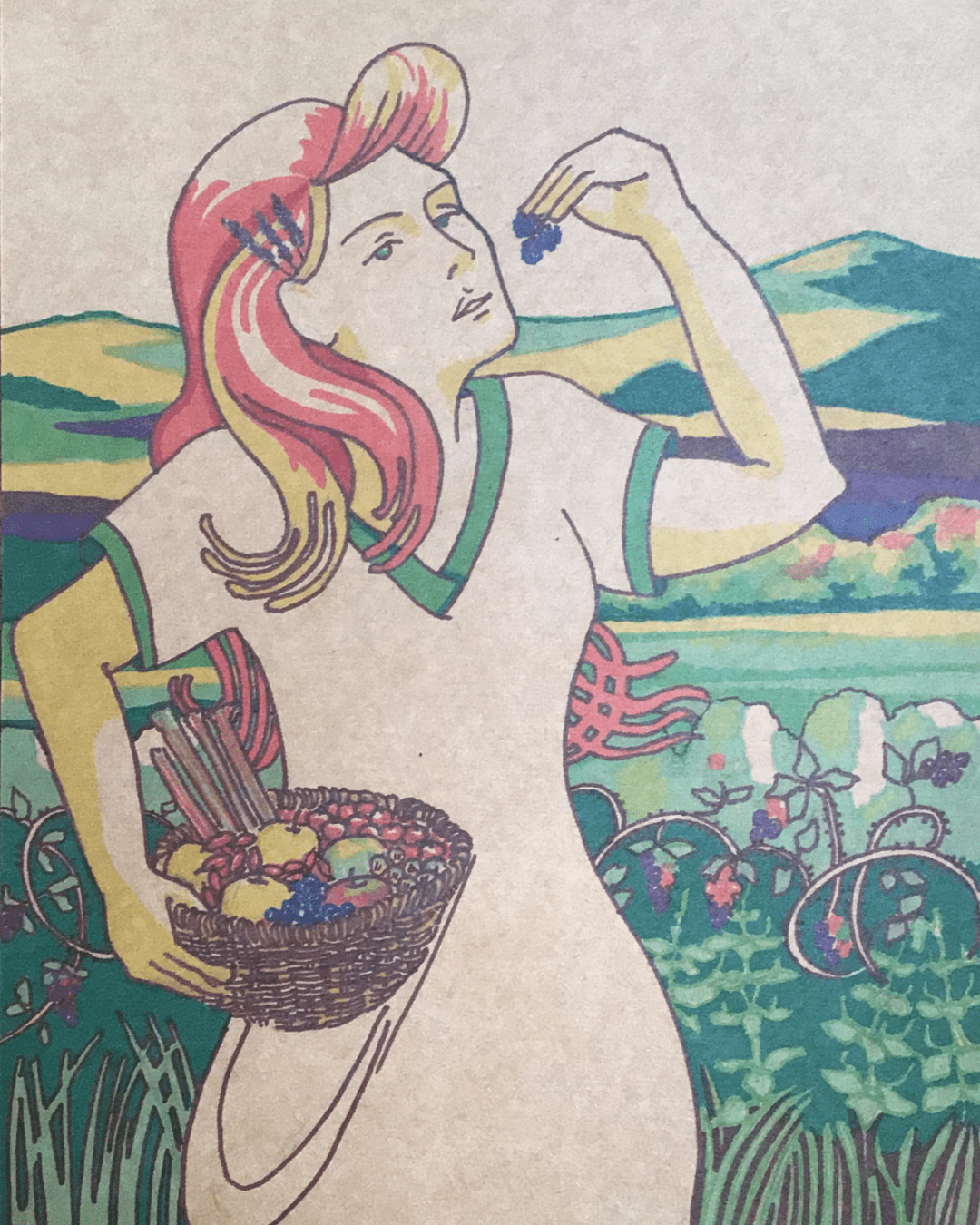
Seasons and growth. At this time of year nature is at it’s most bountiful. The seasons are like tides; cycling, sometimes providing bumper harvests, other years producing less.
When you’re not directly involved in food production, you become divided from this seasonal effect. We ship food from across the globe and eat many of the same foods year round. It’s easy to forget the benefits of seasonal variation, and the awesome fact that many foods appear locally, just as they are needed, to supplement our diet with the vitamins and minerals required, particularly to see us through the winter.
So what are we putting in our mouths? Probably the same stuff over the course of the year. Many successful agricultural cultivars have been developed with much lower nutritional value than their wild cousins, and harvested before reaching full or even semi-ripeness. Animals and fish are often farmed intensively, yielding similar results. It’s easy to conclude that we may be building up too much of some content and be permanently depleting ourselves of others. I genuinely think this must be why many of us in modern society never feel satiated and overeat.
According to environmentalists, it is consumers that have to drive the change in demand to supermarkets. But this is a choice for the privileged few. Most of us just have to feed ourselves with the little money we have. And until there is more locally produced, seasonal food readily available, we will choose the cheaper packet of food, somehow still cheaper after being shipped and frozen, from the other side of the globe.
So food production is something that is behind-the-scenes for most of us. But the status-quo cannot continue. Agriculture has turned into this modern monster and it is causing huge problems around the world – floods and droughts, mega pests and diseases, soil depletion, deforestation, and we are completely, utterly at the mercy of this process…we cannot survive without food, and farmers cannot survive without being paid.
I don’t know how to solve this problem. At a local level, it means trying to support producers that practice good land management and animal husbandry wherever possible, eat seasonally, forage where possible (or learn to), and learn to grow some food ourselves. Above this, governments have to support change and, in particular, subsidise the better farming practices, and possibly even consumer choices in supermarkets.
What’s happening in the world now has demonstrated that we need to become more resilient and self-reliant in our food production, among (many) other things.

 meandertect