Consider at first, that a place exists, and it is simply a crossing of roads, a meeting point – almost everywhere started as a sort of trading point. So cities were built around human movement and activity, not around buildings. I know that sounds obvious, but maybe it isn’t.
Almost every western city has experienced some degree of ‘slum clearance’, clearance for roads or infrastructure, demolition for new ‘better’ development. I find it fascinating looking at old maps and trying to understand the story of a settlement’s or city’s morphological development.
Looking at older, medieval developments, there was often a high density of development centred around an open square or series of squares, with the major civic functions located there. Buildings were built to suit the topography and local climate, made from locally available materials. Of course they were different times and defence also features heavily in the plans; city walls, towers and the like. I’m not trying to be nostalgic about this, but I think maybe we have lost this art of developing cities, of shaping them for what we actually need.
I do worry about how, now more than ever with fuel and technology, we can enable change upon the world. From an architect’s perspective, I think about all the, for want of better words, ‘social experiments’ imposed on people, particularly in the 60s/70s, where large areas were cleared for ‘better, modern housing’ and motorways. Of course the ideas for change have always been about to some extent, but the rate of change of our urban, suburban, and even rural areas is accelerating. Hence, rightly so, we have a planning and building control system, though it doesn’t always stop poor development decisions slipping through the net.
I think this also has parallels in other areas of life, and the world we shape around us. We are too ready to make change without identifying first whether it is actually progress.
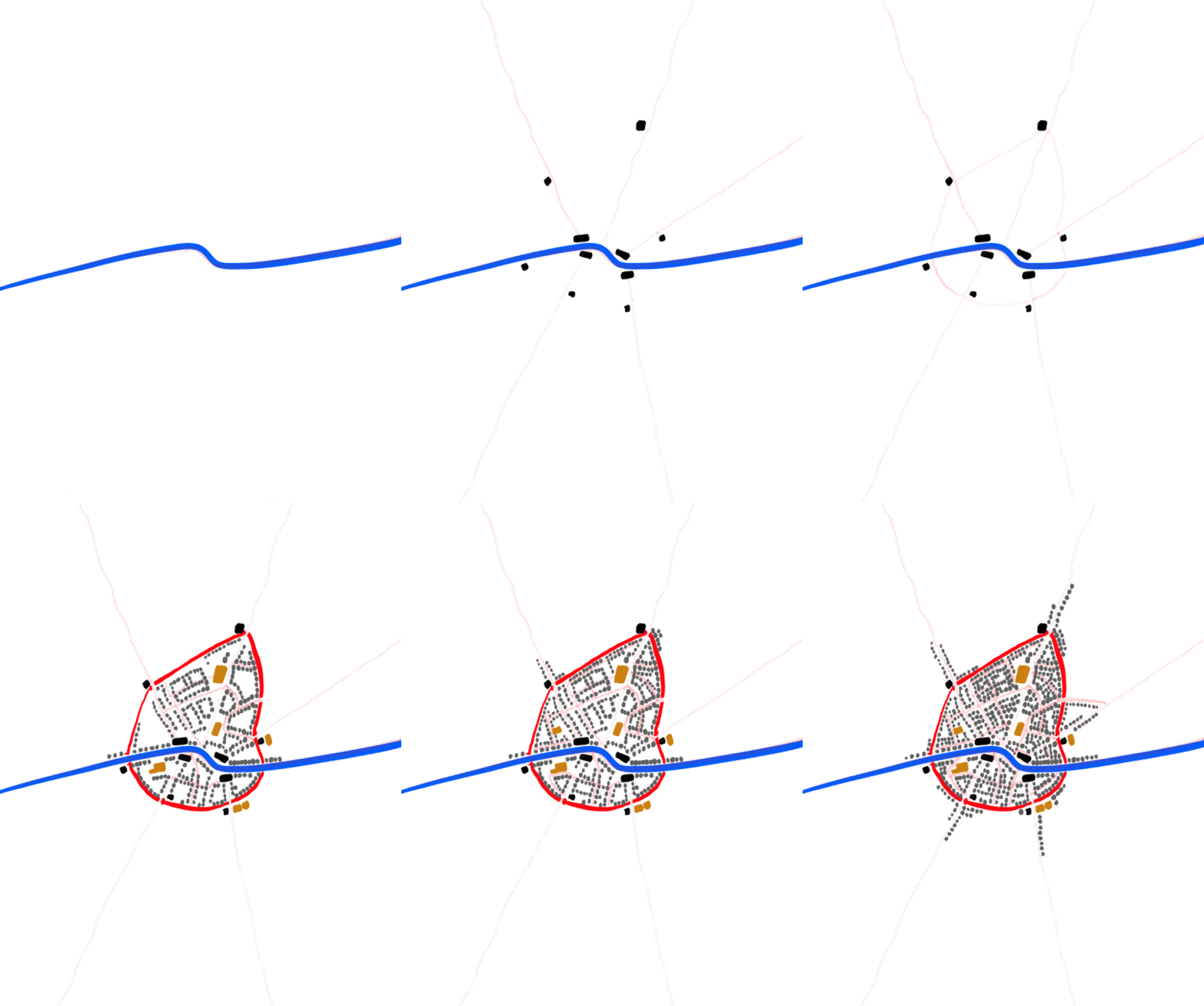
This post suggests the formation of a city; initially around a river and natural meeting point; trading posts develop, then people settle nearby to support (and benefit from) the activity; sufficient development occurs to justify fortification; expansion occurs with development becoming denser. The finished map might place us in medieval times. The next stage might be Enlightenment clearance, or perhaps an invasion from the south…

 meandertect